Concept Prototype
Touch Free Interactive Experience
A concept demonstrating how computer vision can replace touchscreens for interaction.
Visitors navigate rich multimedia content using natural hand movements and dwell-based selection, creating an engaging, hygienic and accessible interactive experience for exhibitions, visitor centres and large-format displays.
How It Works
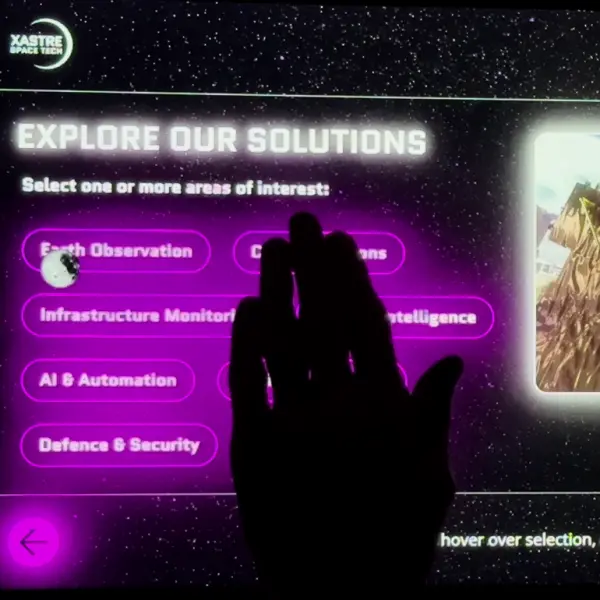
Designed for non-touch interactions with large displays, video walls and digital installations, this concept allows visitors to navigate and explore content using simple hand movements.
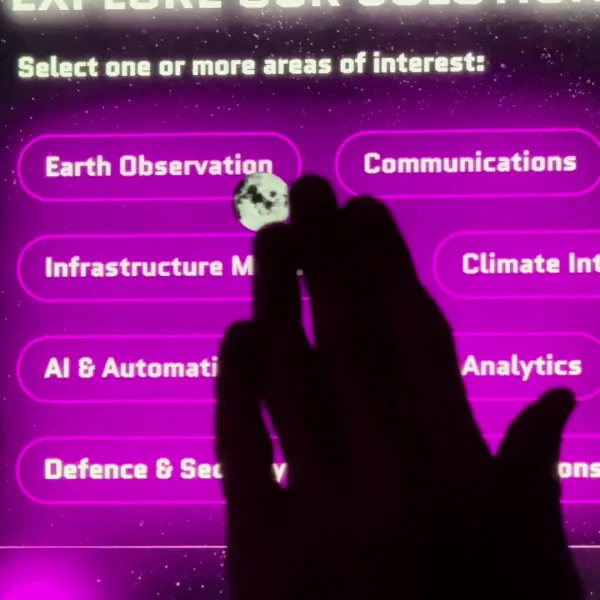
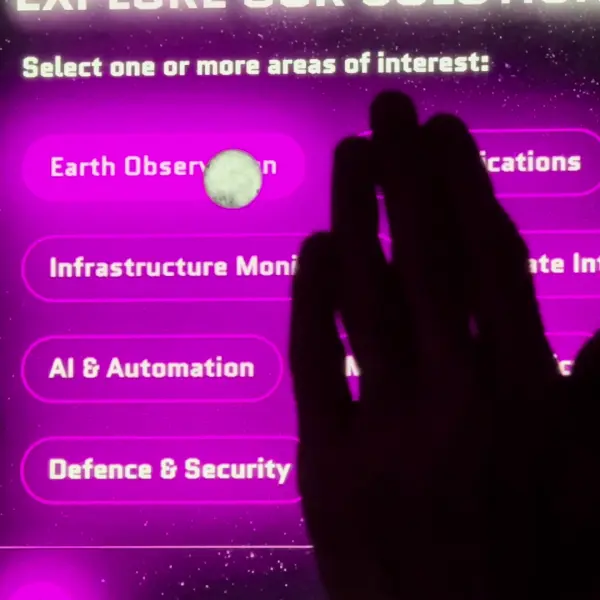
An on-screen cursor follows the visitor's hand in real time. Holding the cursor over an interactive element for a short period automatically triggers a selection, removing the need for physical contact or handheld controllers.
The interface has been designed to feel intuitive from the first interaction, requiring no explanation beyond visual prompts. Visitors simply point, pause, and explore.
While demonstrated as an exhibition experience, the same interaction model could be applied to museums, visitor attractions, retail displays, digital signage and any environment where touch-free interaction is desirable.
Natural hand movements become the interface, allowing visitors to explore content without touching the screen while creating a more engaging and accessible interactive experience.


Suitable For
- Retail showrooms
- Trade exhibitions
- Product launch events
- Museum exhibit interaction
- Interactive digital signage
Why It Works
- Allows interaction without touching shared surfaces
- Creates a visually engaging experience from a distance
- Encourages playful, intuitive exploration
Technical Summary
- Computer vision hand tracking
- Touch-free cursor control with dwell-based selection
- Web-based front-end
- Designed for kiosk and exhibition deployment
More Technical Information
- A camera positioned above or below the display continuously tracks the visitor's hand using computer vision, translating its position into a smooth on-screen cursor
- To prevent accidental selections, interface elements are activated using dwell-based interaction. Holding the cursor over a target for a short period displays a visual progress indicator before triggering the selection, allowing users to naturally confirm or cancel an action simply by moving away.
- The application runs entirely within a web browser, making it easy to deploy across a wide range of hardware while integrating with existing exhibition software and content management systems.